
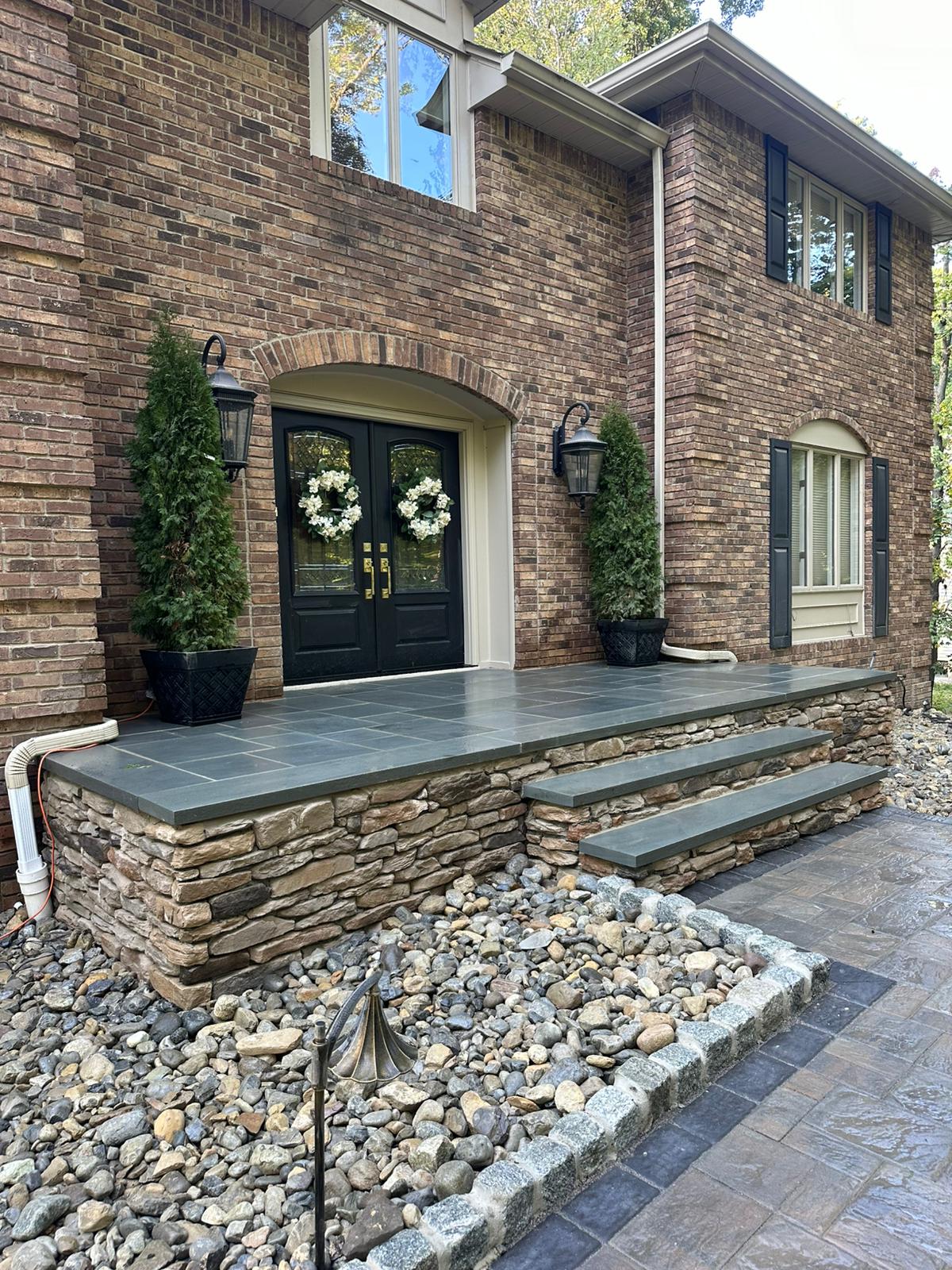
If you’ve been putting off a masonry repair — a cracked chimney crown, some repointing that’s been needed for a couple of seasons, a retaining wall that’s shifted slightly — you’ve probably asked yourself at some point: does it actually matter when I get this done?
It does, more than most people expect. Masonry isn’t like most home repair work. Mortar is a living material in the sense that it undergoes a chemical curing process after application — one that depends on temperature, humidity, and time. Get those conditions wrong, and a technically competent repair can still fail within a season or two. Get them right, and properly done mortar work will outlast the bricks around it.
This guide covers the timing question fully — by season, by project type, and with the nuance that separates advice that actually helps from the generic “spring and fall are good” answer you’ll find everywhere. If you’re in New Jersey, the specifics matter, because our winters are brutal, our summers are humid, and the window for optimal masonry conditions is narrower than it is in many other states.
Why Timing Matters: The Chemistry of Mortar
Most people think of mortar as something that just dries. It doesn’t — it cures, which is a fundamentally different process. When Portland cement (the binding agent in most masonry mortars) is mixed with water, a chemical reaction called hydration begins. Calcium silicate hydrate crystals form, knitting the mortar together and giving it compressive strength. This process takes days to weeks to complete, and it requires two things: enough moisture to sustain the reaction, and temperatures above approximately 40°F.
If the temperature drops below freezing before the mortar has achieved adequate strength, the water in the mix freezes and expands. The crystalline structure that was forming ruptures. The repair looks intact on the surface but is internally compromised — and it will fail faster than original material would. This is the core reason why fall and winter work is risky in New Jersey: our temperature swings are dramatic and can catch fresh mortar at a vulnerable stage.
On the other end: if mortar dries out too fast in hot, dry summer conditions before the hydration reaction has run its course, you get similar problems. The reaction stops mid-process, leaving mortar that’s weaker than it should be and more prone to shrinkage cracking. In direct afternoon sun in July, this can happen in a matter of hours.
Understanding this is what separates a masonry contractor who simply “does the work” from one who does the work in a way that holds for twenty years.
Good timing isn’t a scheduling preference — it’s a quality control decision. The same repair done in April versus December can have dramatically different longevity.

Spring: The Best Overall Window
Spring is the strongest season for masonry repair in New Jersey, and the reasons stack up quickly.
Temperatures in April, May, and into June typically hold above 40°F overnight without getting close to freezing — giving mortar safe curing conditions around the clock. Daytime temperatures stay moderate enough that rapid surface drying isn’t a risk. Humidity tends to be higher than summer, which actually benefits mortar curing: a slightly humid environment during the first 48 hours of cure helps the hydration reaction run more completely, producing a denser, harder mortar matrix.
There’s also the diagnostic advantage of spring. After a full NJ winter of freeze-thaw cycling, damage that was marginal in November is now unambiguous. Cracks that were hairlines are now visible gaps. Mortar joints that were worn are now clearly eroded. Spalled bricks that were borderline now need attention. Doing a masonry assessment in March or April gives you the full picture of what winter did, so repairs can be scoped correctly rather than partially.
This timing is especially important for chimney masonry work. Chimneys take the most direct freeze-thaw punishment of any masonry element on a home — fully exposed on all four sides, with a flue that can draw cold air through the structure. By March, a chimney’s winter damage is fully visible: spalling faces, eroded joints, cracked crowns, compromised caps. Spring is the time to address them before another wet season pushes more water into existing damage.
The practical argument for spring is scheduling. Masonry contractors — like roofing and gutter contractors — fill their spring calendars fast once the weather breaks. If you wait until you’re ready to start work before making calls, you may find yourself waiting until June or July for an appointment. Reaching out in February or early March, while weather is still too cold to work, positions you at the front of the queue when conditions become optimal.
Spring appointments book 30 to 40 percent faster than any other season in New Jersey. If your repair is time-sensitive, reach out before the weather breaks.
Summer: Workable, With Conditions
Summer masonry in New Jersey is possible — our contractors do it regularly — but it requires more active management to achieve the same quality outcomes.
The main risk is exactly what the chemistry explains: hot, dry conditions pull moisture out of fresh mortar before full hydration can occur. A mortar joint pointed on a 90-degree July afternoon in direct sun can surface-dry within an hour or two. To the eye it looks fine. Structurally, the reaction was cut short.
Experienced masons compensate in several ways. Scheduling repointing and jointing work for early morning hours — finishing before midday when heat peaks — is the most straightforward approach. Misting fresh mortar with a fine water spray during the first hours of curing (a practice called “wet curing” or “moist curing”) extends the hydration reaction significantly. Shading freshly pointed sections when working in full sun is standard practice. Some contractors also use retarding admixtures in the mortar mix that slow the initial set time, giving hydration more time to proceed in hot conditions.
For larger masonry projects — new patios, retaining walls, concrete pours — summer is often a good time. The larger mass of material buffers temperature effects better than thin pointing work, and the extended daylight hours allow for longer working windows. These projects also benefit from summer’s typically dry conditions, which reduce the risk of rain disturbing fresh concrete during placement.
What to avoid in summer: thin repointing work on south or west facing masonry in direct afternoon sun, and any mortar work during heat advisories or when temperatures are forecast above 90°F. These aren’t arbitrary cautions — they’re the conditions under which summer mortar failures almost always occur.
Fall: Excellent, But the Window Closes Fast
September and the first half of October are the second-best window for masonry repair in New Jersey — comparable to spring in many respects, and in some ways preferable. The heat of summer has passed, humidity has dropped to more moderate levels, and contractors who were busy all summer often have more availability.
The danger with fall is that the usable window is genuinely narrow. NJ average temperatures start dropping toward the 40°F overnight threshold in mid-October, and once an overnight frost arrives, fresh mortar is at risk. The challenge is that weather in New Jersey is notoriously variable — a warm October can suddenly give way to a cold snap that drops temperatures into the 20s.
This creates a real urgency for fall chimney repair specifically. Most homeowners with wood-burning fireplaces start using them in late October or early November. If your chimney needed repointing or crown repair going into fall, you want that work completed by early-to-mid October at the latest — both to allow adequate curing time before the cold arrives, and to have the chimney ready for use when you need it.
Mortar that hasn’t fully cured is significantly more vulnerable to freeze-thaw damage than mature mortar. New mortar needs approximately 28 days to reach full design strength, though it develops most of its practical strength in the first week. A repair done in mid-October in NJ has a reasonable curing window. One done in late October is gambling on the weather.
For masonry work that isn’t chimney-related — patio repair, retaining walls, brick pointing on exterior walls — the same window applies, but without the added pressure of fireplace season. If you’re flexible, fall work done by mid-October is excellent quality. If you’re scheduling in November, wait for spring.
Winter: When to Avoid It, and When You Can’t
Let’s be direct: standard mortar work in freezing temperatures fails. This isn’t a matter of contractor skill or material quality — it’s physics. Frozen mortar is structurally compromised mortar, full stop. Scheduling repointing, crown repair, or any mortar-based masonry work when temperatures are at or consistently below freezing is a way to pay for the same job twice.
That said, masonry emergencies don’t observe seasons. A chimney crown that has split completely and is funneling rainwater into the firebox needs stabilization regardless of the calendar. A retaining wall with active movement that’s threatening a driveway or structure requires immediate attention. For these situations, professional contractors can deploy cold-weather masonry protocols: heated enclosures around the work area, heated water in the mortar mix, insulated blankets over fresh work to maintain curing temperatures, and the use of cold-weather accelerating admixtures. These approaches add cost and require experienced judgment, but they make emergency winter repairs viable.
The practical distinction is this: scheduled, elective masonry work should wait for spring or fall. Emergency stabilization and structural safety work can be done in winter with the right protocols — but go in with honest expectations about cost and the likelihood that a more comprehensive repair will follow in spring.
Project-by-Project Guide: Best Timing for Each Service
Chimney Repointing and Repair
Spring is the clear first choice for chimney masonry work. The reasons compound: full visibility of winter damage, optimal curing conditions, and adequate lead time before fireplace season. If your chimney inspection reveals needed work, booking in March or April for an April or May completion is the ideal sequence. Early fall is a viable second option, but aim for completion by October 1 to be safe.
Brick and Stone Pointing on Exterior Walls
Mid-April through June, or September through mid-October. Avoid summer afternoons in direct sun and any conditions where overnight temperatures might approach freezing. This is the most temperature-sensitive of the common masonry repairs — thin joints have little thermal mass and are the most vulnerable to rapid temperature changes.
Retaining Walls — Repair and New Construction
Spring is the best time to assess and repair retaining walls. The reason: frost heave and soil movement over winter can shift walls in ways that aren’t fully apparent until the ground thaws and settles. Doing a repair assessment in March, after the ground has thawed, gives you the true picture of how the wall performed. New retaining wall construction can be done spring through early fall.
Patio, Walkway, and Driveway Masonry
Late spring through early fall — concrete and stone flatwork is more forgiving than vertical mortar work, but still benefits from moderate temperatures during placement and curing. Avoid late fall installation if temperatures will drop below freezing within the first 28 days after the pour.
Gutters — Winter Damage Assessment
Post-winter gutter inspection and repair belongs on the spring list. Ice loading commonly damages gutter mounting hardware, deforms gutter profiles, and causes fascia rot. Address these before spring rain season arrives in full. If ice buildup was significant this winter, spring is also a good time to evaluate gutter guards — they reduce the debris and ice accumulation that drives gutter damage and contributes to ice dam formation on the roof.
Siding — Post-Winter Assessment
Winter ice and meltwater often damages exterior siding — particularly on north-facing walls and below eave lines where ice builds up. Spring assessment catches any warping, separation, or moisture intrusion before summer humidity compounds it. Our siding team handles everything from spot repairs to full replacement in vinyl, fiber cement, and cedar shake.
The Real Cost of Waiting Another Season
The most expensive masonry jobs we take on are the ones that were deferred for two or three seasons past when they should have been done. This isn’t a sales pitch — it’s the practical reality of how masonry damage progresses.
Masonry failure is progressive in a specific and predictable way. Mortar erodes or cracks, creating a gap. Water enters the gap. Freeze-thaw cycling expands the gap. More water enters. The cycle repeats. By the time a repair that started as repointing has reached the point of needing brick replacement or structural rebuilding, the cost has often multiplied by a factor of five to ten.
A chimney that needed repointing in 2022 and didn’t get it will often need partial rebuilding by 2024-2025. A retaining wall with a failed cap joint left through two winters becomes a leaning wall. A patio with cracked mortar joints, once water gets beneath the surface and the freeze-thaw cycle lifts the stones, requires full resetting rather than simple repointing.
None of this is meant to alarm — it’s meant to be useful. If you’re looking at masonry on your home and thinking “I’ll get to that next year,” the honest answer is that next year will cost more than this year. Not always dramatically more. But consistently more, in a way that compounds.
A masonry repair deferred for one season is almost always more expensive than one addressed promptly. Two seasons deferred? Often significantly more so.
Ready to Schedule? Here’s Where to Start
The sequence that works best for most NJ homeowners is simple: do a walk-around inspection in March or early April, note what looks different from last year, and call for a professional assessment before the spring rush fills contractor calendars.
You don’t need to know exactly what’s wrong or what the repair involves. That’s what the inspection is for. What matters is making the call while there’s still time to schedule work in the optimal spring window.E Pro Construction has provided masonry repair, chimney restoration, roofing, gutters, and siding services across New Jersey for nearly 30 years. We offer free estimates, same-day quotes, and no-pressure assessments. Call us at (862) 232-6765 or schedule a free estimate online