
Every March in New Jersey, a predictable pattern plays out. Homeowners start noticing a faint yellowish ring on the ceiling near the exterior wall. Or they find paint bubbling on the inside of a second-floor bedroom. Or they go into the attic for the first time since November and find the insulation matted down and stained dark near the eaves.
None of these things happened in one storm. They happened slowly, over the course of a winter, through a process called ice damming — and by the time the evidence is visible indoors, the damage is usually further along than it looks.
The good news: March is exactly the right time to catch it. The ice is gone, the roof is accessible, and what the winter left behind is now visible. Here’s how to read the signs — from the ground, from inside the attic, and from the ceiling below.
What Is an Ice Dam, and Why Does It Cause Damage?
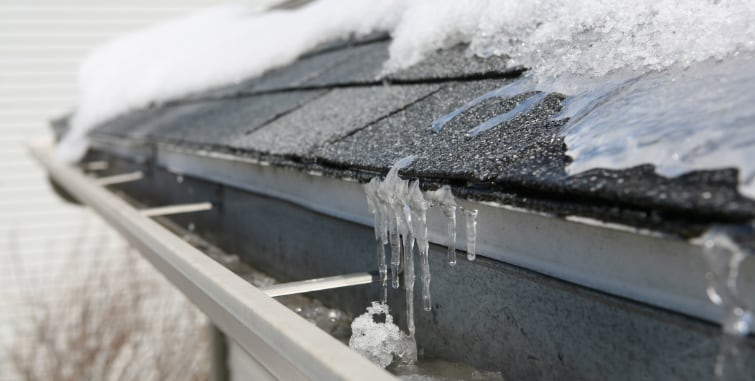
An ice dam is a ridge of ice that forms along the lower edge of a roof, typically at the eaves, during cold weather. Understanding how it forms makes the damage patterns easier to recognize.
Heat from your living space rises into the attic. If the attic is poorly insulated or ventilated, that heat warms the roof deck. Snow on the upper part of the roof — which sits over the warm deck — melts, even when outdoor temperatures are below freezing. That meltwater runs down the roof slope toward the eaves. But the eaves overhang beyond the exterior wall. They don’t receive warmth from below. The water hits that cold zone and refreezes, building up a ridge of ice — the dam.
Behind that dam, water pools. Liquid water is patient. It finds every seam between shingles, every nail hole, every worn section of underlayment. It wicks sideways under shingles. It sits against the roof deck and soaks in. Eventually it finds a path downward — through the sheathing, into the insulation, along a rafter, and into the ceiling below.
The critical thing to understand is that this isn’t a catastrophic failure. There’s no sudden leak. The water moves quietly, slowly, and often weeks pass between when it enters the roof and when a stain appears on your ceiling.
Ice dams don’t mean your roof was poorly installed. Even a well-built roof can be vulnerable if attic heat loss is high — the problem starts in the attic, not on the shingles.
Sign 1: Water Stains on Ceilings or Walls Near the Eaves
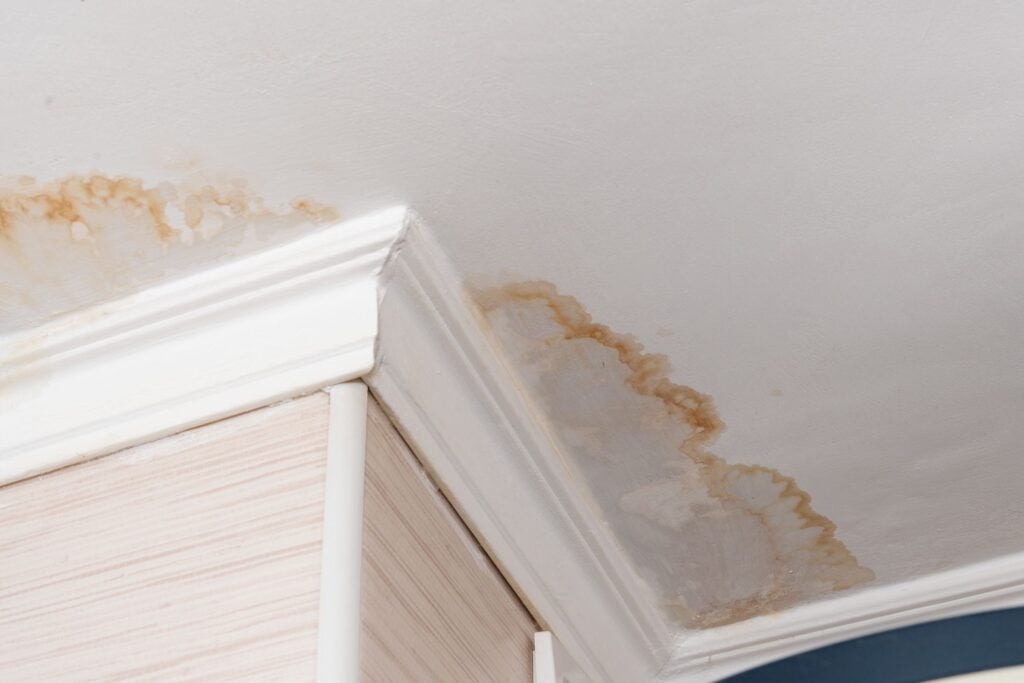
This is the sign that most often prompts a phone call — and often it’s not small. Brown or yellow rings on the ceiling, sometimes with a darker edge and a faded center. Bubbling or peeling paint on walls near exterior corners. A soft, slightly spongy feel to drywall that used to be solid.
The location matters enormously here. Stains that appear directly inside from the eave line — typically within two to four feet of an exterior wall — are the classic ice dam signature. If the stain is in the center of the ceiling or near a plumbing line, the cause is probably something else. But eave-adjacent staining that appeared or worsened this winter points squarely at water infiltration from the roof edge.
What you’re seeing is the tail end of the damage. The stain itself is mineral residue left behind as water soaks into drywall and dries out repeatedly. Behind that stain is likely wet or compressed insulation, and possibly stained or soft roof decking above it. A stain that looks like a cosmetic issue often represents a much larger repair job waiting to happen.
What to do: Don’t just paint over it. Have the roof and attic inspected before the next rain. Water that has already found a path in will follow it again. Our roofing team provides free inspections and can tell you exactly what’s happening above that stain.
Sign 2: Lifted, Cracked, or Granule-Bare Shingles Along the Lower Roof
Walk around the perimeter of your house — ideally with a pair of binoculars — and look at the first two or three rows of shingles from the bottom of each roof slope. After a winter with ice dam activity, this zone takes the hardest hits.
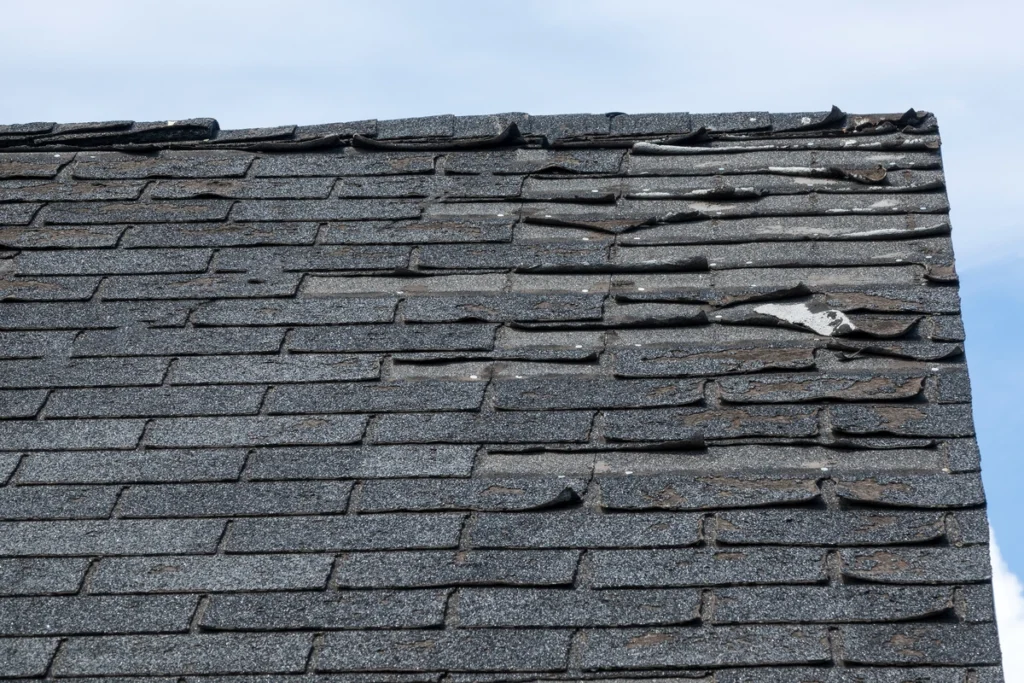
What you might see: shingles that look slightly buckled or raised at their lower edge, like they’ve been partially pried up from below. Shingles with visible cracking — either across the face or at the tab edges. Areas where the surface granules are visibly thin or missing, exposing the darker asphalt substrate beneath.
Granule loss is worth understanding. Those small mineral granules embedded in asphalt shingles serve a real purpose — they protect the asphalt from UV degradation and add impact resistance. When ice forms and then shifts as temperatures cycle, it scours granules off the shingle surface. Patches of granule loss in the lower few rows of the roof, after a winter with significant ice, are almost always related to ice dam activity.
Also look carefully at the roof valleys — the V-shaped channels where two roof planes meet. Valleys collect more snow and ice than any flat section of the roof, and ice dam damage concentrates there. A valley that has cracked, separated, or lost its sealing is a serious leak risk in every spring storm.
What to do: Minor shingle lifting can often be re-sealed. Cracked or badly granule-worn shingles need replacement. A valley that has failed needs immediate attention — it will leak in the next significant rain. Schedule an inspection with our roofing team to get an honest assessment before the spring rain season begins.
Sign 3: Gutters Pulling Away, Sagging, or Badly Deformed
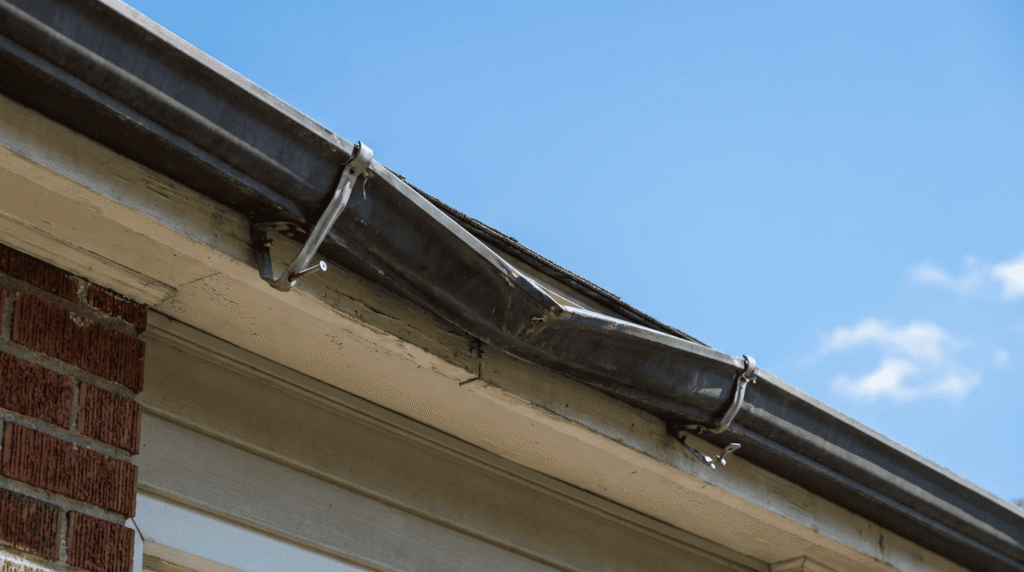
Gutters were never designed to hold the weight of packed ice. A ten-foot section of ice-filled gutter can weigh hundreds of pounds — far beyond what the mounting hardware was designed to support. After a winter with ice dams, gutters bear the evidence visibly.
Look for gutters that have pulled away from the fascia board, leaving a visible gap between the back of the gutter and the roofline. Look for sections that sag noticeably in the middle — a sign the mounting points have been overstressed or torn loose. Look for deformation at the back edge of the gutter, where expanding ice has pushed against it from above.
Beyond the gutter itself, pay attention to the fascia board — the horizontal board the gutters attach to. When ice sits against it repeatedly and meltwater gets behind the gutter, wood rot sets in. Press gently on the fascia in a few spots. If it feels soft or spongy, or if you can see paint bubbling and wood discoloration, rot is present. This is important to catch before installing replacement gutters, because mounting new gutters into rotted fascia wood means they won’t stay mounted for long.
The soffit — the underside of the roof overhang — is worth checking too. Water that gets behind failed gutters often travels along the soffit before dripping down the exterior wall. Staining, peeling paint, or visible moisture on the soffit below where ice built up is a clear indicator.
What to do: Gutter repair or replacement paired with fascia repair is often a single project — handle them together rather than separately. And consider upgrading to gutter guards, which reduce the debris accumulation and ice formation that makes damming worse. Properly installed guards can reduce the severity of future ice dam seasons significantly.
Sign 4: Ice Residue and Staining on Siding Below the Eaves
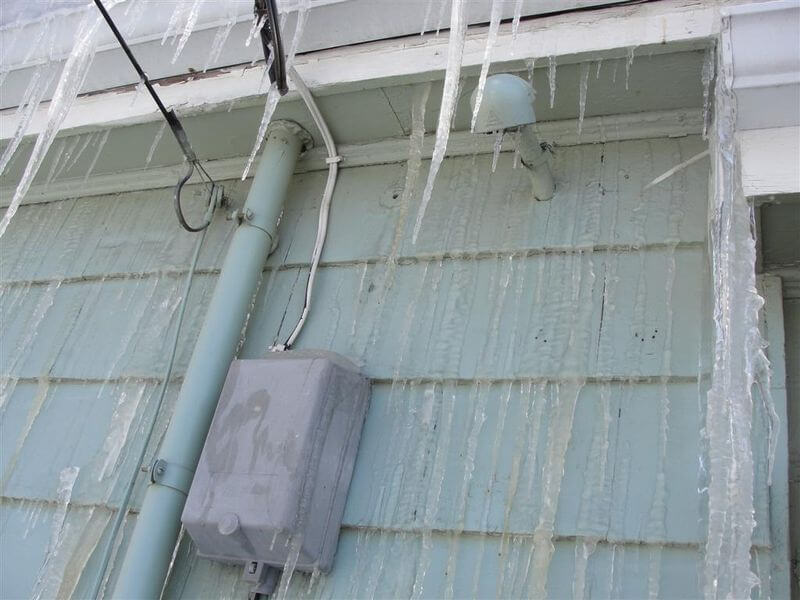
After the icicles are gone, look at the siding directly below the eaves — particularly on north and east facing walls where ice tends to linger longest. What winter left behind is usually readable.
Horizontal streaking on siding below the roofline, staining that radiates downward from the eave, paint that is peeling or bubbling on the upper portion of exterior walls, or siding boards that look warped or slightly separated — all of these are signs that meltwater has been running along and behind the siding repeatedly.
This matters more than it looks. When water gets behind exterior cladding, it sits against the sheathing and framing. Over repeated cycles, this leads to wood rot in the wall structure — not just a cosmetic issue. Vinyl siding that looks intact on the face can be concealing saturated sheathing behind it.
If the damage was significant, spring is the time to address it — before summer humidity adds moisture from the inside and the affected wood has no chance to dry out properly.
What to do: Have the siding in the affected area inspected. In many cases the siding itself is repairable without full replacement. Our siding team can assess what’s cosmetic versus what has affected the underlying structure, and give you a straightforward recommendation.
Sign 5: Attic Evidence — The Most Reliable Indicator
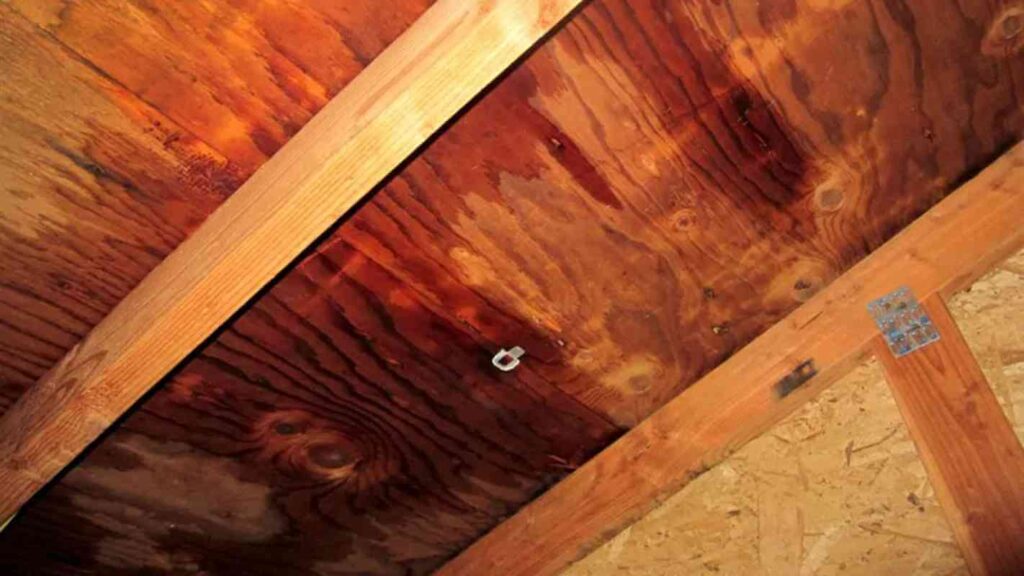
If you only do one thing after reading this article, make it a quick attic inspection. Bring a flashlight, be careful of your footing, and head to the area above the eave line — this is where ice dam damage shows up most clearly and most honestly.
What you’re looking for on the roof deck (the boards directly underneath the shingles): dark staining, which indicates moisture has made contact with the wood. Soft spots when you press gently against the sheathing — saturated wood loses structural integrity and is also a mold risk. Any visible daylight between sheathing boards is a problem that goes straight to the exterior.
Look at the rafters too. Water that gets through the roof deck often runs along rafters before dripping further down. Staining along the length of a rafter, particularly running from the eave line inward, traces the path water traveled.
The insulation tells a story as well. Insulation near the eaves that looks matted, compressed, or discolored — rather than fluffy and clean — has been wet. Wet insulation loses most of its R-value (its ability to insulate), and once it’s been saturated and dried multiple times, it doesn’t fully recover. Wet fiberglass batts are also a mold risk if the attic isn’t well ventilated.
The attic is where ice dam damage is most legible. A twenty-minute inspection up there in March is worth more than any amount of guessing from below.
What to do: If you find stained or soft sheathing, that section of decking will likely need to be replaced before re-roofing — it can’t provide a solid nailing surface for new shingles. If you find compressed or stained insulation, it should be replaced as well, both for energy efficiency and to eliminate the moisture source for potential mold growth. Our roofing team includes attic inspection in all our estimates — we want to know the full picture before recommending a scope of work.
Why Ice Dams Happen — and What Actually Fixes Them
Repairing current damage is the first step. But if you don’t address what created the ice dam in the first place, the same thing will happen next winter.
The root cause is almost always attic heat loss. When conditioned air from your living space leaks into the attic — through recessed light fixtures, attic hatches, plumbing chases, or gaps at the top of interior walls — it raises attic temperature above the ambient outdoor temperature. That heat transfer to the roof deck is what starts the whole cycle.
There are two complementary solutions. The first is air sealing: physically closing off every pathway that allows heated air to migrate from the living space into the attic. This is often more impactful than adding insulation, because even well-insulated attics can have significant air leakage. The second is increasing attic ventilation — ensuring that cold outside air can move through the attic space freely, keeping the roof deck at a consistent temperature from ridge to eave.
On the roofing side, an ice-and-water shield membrane installed along the eaves and in valleys provides a secondary line of defense. This self-adhering membrane seals around nail penetrations and prevents water from wicking under shingles even when it backs up behind a dam. New Jersey building code requires it on new installations — but many older homes either predate that requirement or have membranes that have reached the end of their service life.
If your roof is 15 or more years old and has experienced ice dam damage, it’s worth having it assessed for both the immediate repairs and whether a full replacement with modern ice-protection details makes more sense as a long-term investment. Our roofing team will give you an honest answer either way.
The Right Move for Spring Time
The window between “winter ended” and “spring rain season begins” is short in New Jersey — and it’s the best possible time to assess and repair ice dam damage. The damage is fully visible, conditions are right for repair work, and you can get it done before the next round of heavy rain tests whatever the ice left behind.
Don’t wait for a ceiling stain to grow, a lifted shingle to become an active leak, or a sagging gutter to pull the fascia off the house. The repairs are almost always less expensive when they’re addressed early.
E Pro Construction has been doing roofing, masonry, gutters, and siding work across New Jersey for nearly 30 years. We offer free roof inspections, honest assessments, and same-day quotes. Call us at (862) 232-6765 or request your free inspection online.
