
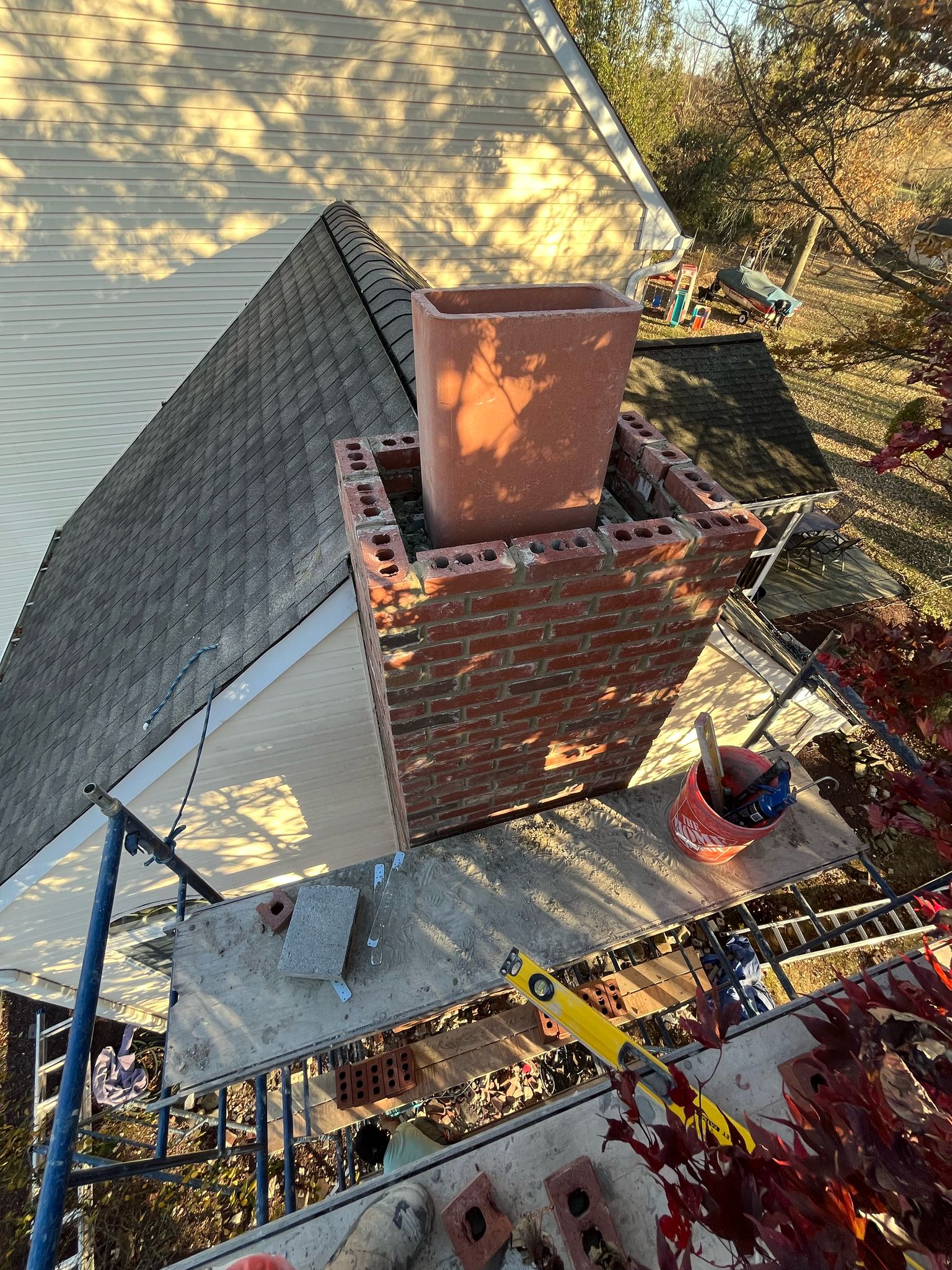
Most homeowners don’t think about their chimney until there’s smoke in the living room — or worse, water dripping through the ceiling. But here in New Jersey, winter is particularly brutal on masonry, and chimneys take the brunt of it.
The problem is a physics phenomenon called the freeze-thaw cycle. Water seeps into tiny cracks in your mortar, brick, or chimney crown. Then temperatures drop overnight, that water expands as it freezes, widening the crack slightly. It thaws the next day, contracts, and more water gets in. Repeat this 30 or 40 times over a New Jersey winter — which is pretty normal — and what started as a hairline crack becomes a structural problem.
The tricky part is that the damage isn’t always dramatic. There’s no burst pipe moment, no obvious “something is wrong” event. The signs tend to be subtle, easy to miss if you’re not looking, and expensive to ignore.
Here’s what to look for this spring.
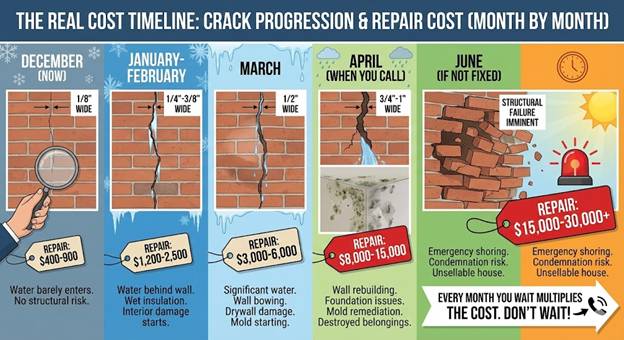
1. Spalling Bricks
Spalling is when the face of a brick flakes, chips, or crumbles away — and it’s one of the most common forms of winter chimney damage in NJ. When water that’s absorbed into brick freezes, the expanding ice literally pushes the surface of the brick off from the inside.
Look for small pieces of brick around the base of your chimney, on the roof, or on the ground near the house. The bricks themselves may look pitted, flaky, or “eaten away” on one face. Even a handful of spalled bricks is a sign that water has been getting in and the damage will continue and accelerate without treatment.
A single bad winter can turn a $400 repointing job into a $4,000 partial chimney rebuild if spalling is left unaddressed.
The fix depends on severity. Minor spalling usually means repointing (replacing the mortar joints) and applying a breathable masonry sealant. More extensive damage may require replacing individual bricks or rebuilding sections of the chimney stack. Our chimney masonry services cover everything from minor repointing to full chimney rebuilds.
2. Cracked or Damaged Chimney Crown
The chimney crown is the concrete slab at the very top of your chimney that seals the top of the masonry around the flue opening. Its job is to shed water away from the chimney. It’s the first and most critical line of defense against moisture — and it’s the part that breaks down most often.
Crowns crack for a few reasons: poor original construction (many older NJ homes have crowns made of plain mortar rather than proper concrete), age, and of course the freeze-thaw cycle. A cracked crown lets water run directly into the top of the chimney structure and into your home.
You can often see crown damage from the ground with binoculars. Look for visible cracks running across the concrete, crumbling edges, or pieces that have broken off entirely. A deteriorated crown might also cause staining down the sides of the chimney from water infiltration.
Crown repair is a job that ranges from simple crack sealing with a flexible crown coat product to full crown replacement — but it’s one of the most cost-effective chimney repairs you can make. A new, properly built concrete crown can last 20-30 years.
3. White Staining on the Chimney (Efflorescence)
That chalky white residue you sometimes see on brick chimneys has a name: efflorescence. It’s caused by water moving through the masonry, dissolving soluble salts inside the brick or mortar, and then depositing them on the surface as the water evaporates.
Efflorescence itself doesn’t damage brick — but it’s a clear indicator that water is getting into your chimney. Think of it as your chimney sending you a message: “Water is moving through me, and that’s a problem.”
After a hard NJ winter, fresh efflorescence that wasn’t there before signals that water infiltration increased over the cold months. Stopping it requires identifying where water is entering — which might be the mortar joints, a cracked crown, or failed flashing — and making appropriate repairs. Our masonry team can diagnose the source and seal it properly.
Cleaning efflorescence is relatively straightforward. Stopping it requires identifying where the water is entering — which might be the mortar joints, a cracked crown, a missing or deteriorating cap, or failed flashing — and making the appropriate repairs.
4. Damaged or Missing Chimney Cap
A chimney cap is the metal cover that sits over the flue opening. It keeps rain, snow, debris, and animals out of your chimney. It’s a small thing with a big job.
NJ winters with heavy snow, ice, and temperature swings can shift, crack, or displace chimney caps — especially older galvanized steel ones that have rusted. Some caps get lifted and pushed off by freeze-thaw movement in the crown beneath them. Others simply rust through.
From the ground, a missing or visibly damaged cap is actually one of the easier things to spot (binoculars help). But even a cap that looks intact from below may have a broken mounting or cracked housing that’s letting water in at the top.
A good stainless steel or copper chimney cap is a $150-400 investment that prevents thousands in water damage. If yours is missing or damaged, it should be high on the spring to-do list. We include cap inspection and replacement as part of our chimney repair service.
5. Deteriorating Mortar Joints
Look closely at the mortar between your chimney bricks. If it appears recessed, crumbling, or missing in places, you’re looking at a repointing problem — and one that likely got worse over the winter.
Mortar joints are deliberately designed to be slightly softer than the surrounding brick. This is intentional: when stress occurs, the mortar cracks before the brick does. Mortar is far cheaper to replace than brick. But when mortar joints erode too far — typically beyond about 1/4 inch of recession — water gets in, bricks start to loosen, and structural integrity begins to decline.
A chimney that needs repointing isn’t in crisis, but it’s heading there. If the joints are noticeably recessed across a significant portion of the chimney, a repointing job before next winter is the smart call.
Repointing a chimney is one of the best value-for-money masonry repairs you can do. Done properly, new mortar joints will outlast the original by decades.

What To Do Now
If you spotted any of these signs during a walk around your property, don’t wait. Spring is actually the best time to get chimney repair done — temperatures are right for mortar work, and you want repairs complete well before you need to light the fireplace again in fall.
A professional chimney inspection can identify issues that aren’t visible from the ground. E Pro Construction provides free chimney inspections and estimates across New Jersey. With over 29 years of masonry experience, we’ve seen every kind of winter damage NJ weather can inflict — and we know how to fix it right. Call (862) 232-6765 or request a free estimate online.